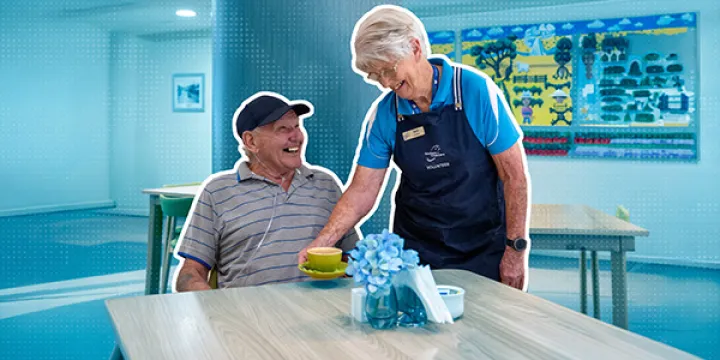
Brewing more than just coffee
Our Cafe Connections program is about more than just caffeine; it is about making a difference through conversation, compassion and genuine connection.
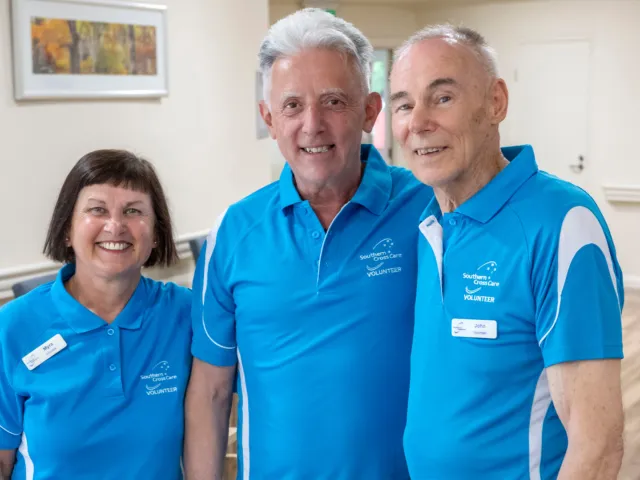
Through the Cafe Connections program volunteers are trained and supported to operate a simple cafe model that has a big impact in our community. We have volunteer opportunities in our Residential Care cafes across Adelaide.
Volunteer to make every cup count
What does a cafe volunteer do?
A rewarding role
As a cafe volunteer you'll have the chance to:
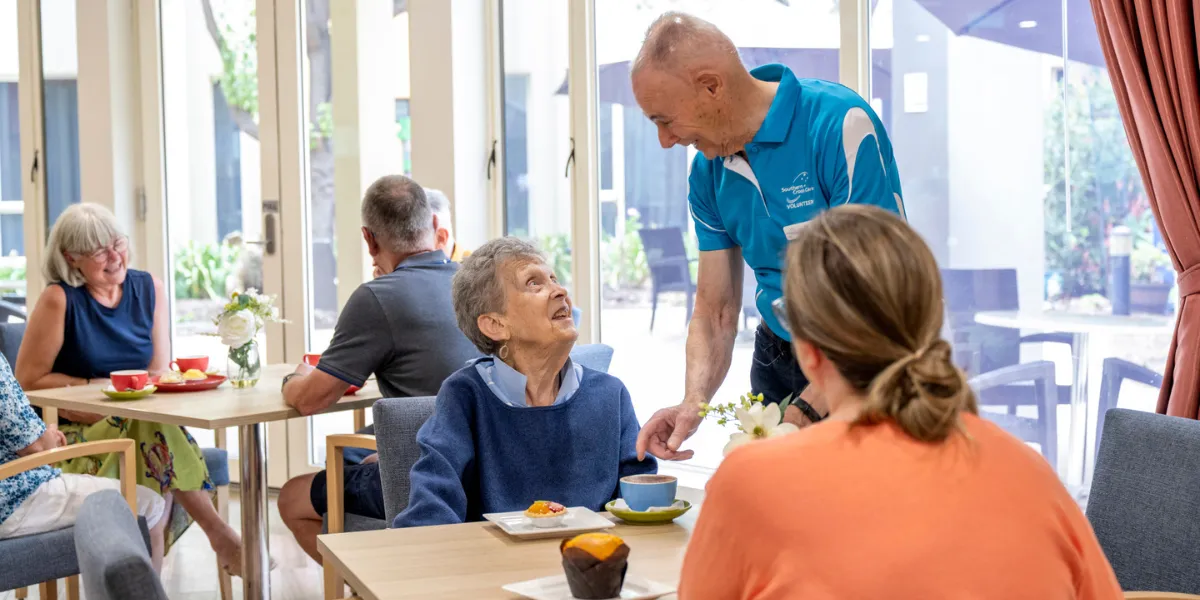
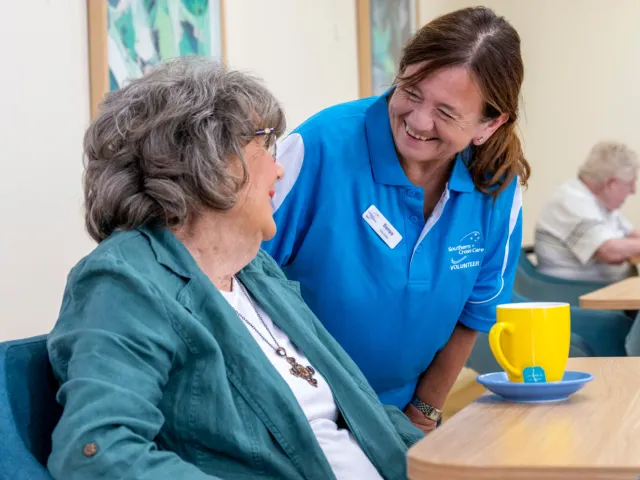
- Brighten a resident's day with a smile and their "usual" order.
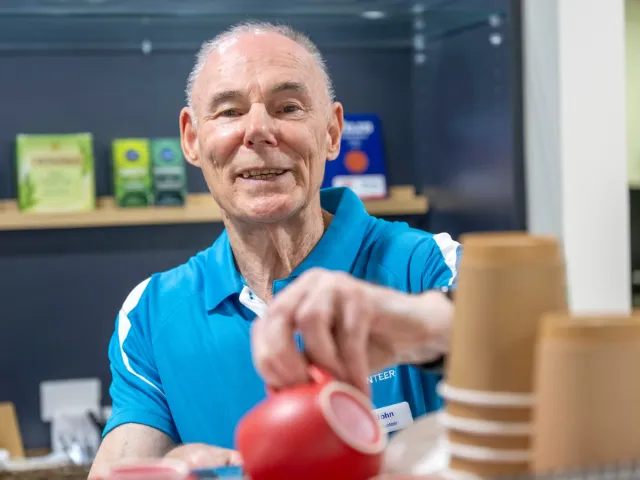
- Learn the art of frothing milk and grinding fresh beans.
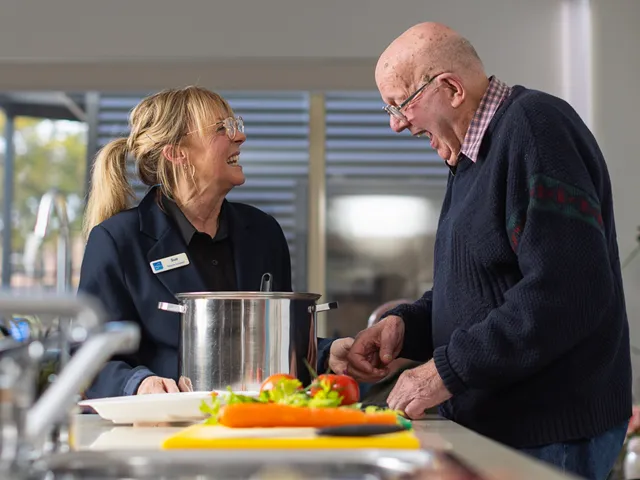
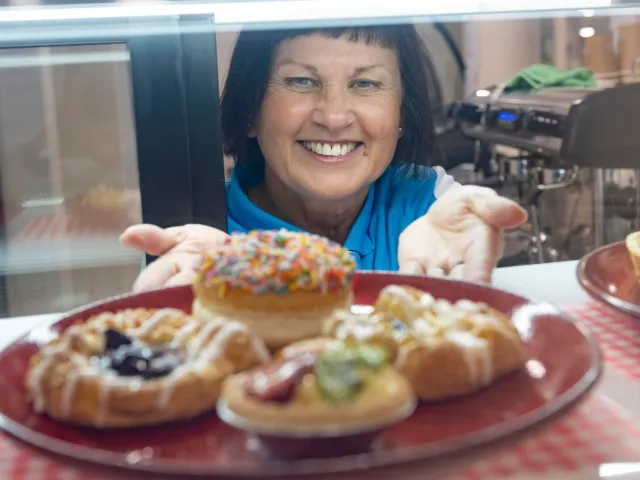
- Enjoy friendly conversations while serving a fresh toasted sandwich or a piece of cake.
When you volunteer with Southern Cross Care, we value your contribution and care for your well-being. We will also provide all the training you need to operate our simple cafe model.
Cafes and connection
Across our aged care homes, our cafes can be vibrant places where residents, staff, volunteers and families come together. When the cafe is open, these spaces are the heart of our communities, providing a warm and social environment for everyone to enjoy.
But some of our homes need the help of volunteers to open the cafe regularly each week.
This is why the Cafe Connections program exists - to get compassionate volunteers into our cafes and support the hubs of connection our communities need.
Help us make every cup count
These images appear larger in the gallery lightbox
Why connection matters
We know that feeling connected and having a sense of purpose is vital for well-being. For our residents, the cafe is a spot to meet a friend, read a book from the library or simply watch the world go by in a comfortable setting.
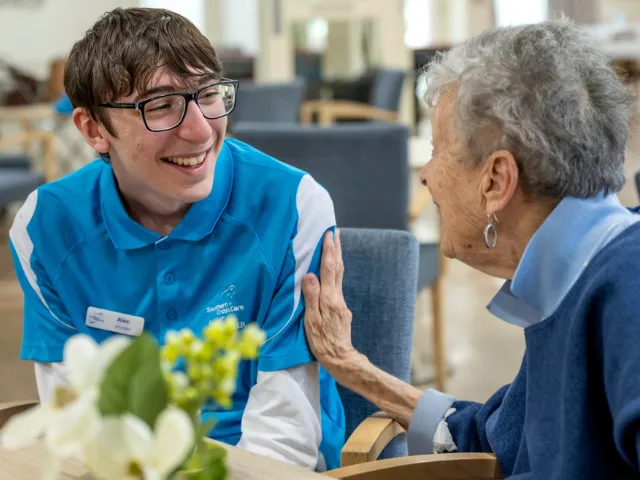
That’s why our cafe volunteers take pride in their work, knowing that they are making a real difference in the lives of our community members.
While we welcome volunteers with cafe or hospitality skills and experience, these are not essential. If you have a great attitude and are willing to learn, we can provide you with all the training you need. Our cafes also operate on a simple model designed to be easy for volunteers to run, without needing a professional level of skill.
Ideally, Cafe Connections volunteers commit to a time slot of at least four hours. However, the frequency of your shifts is entirely up to you and you can choose the days and times that best suit your availability. You can speak to our team about a schedule that works for you.
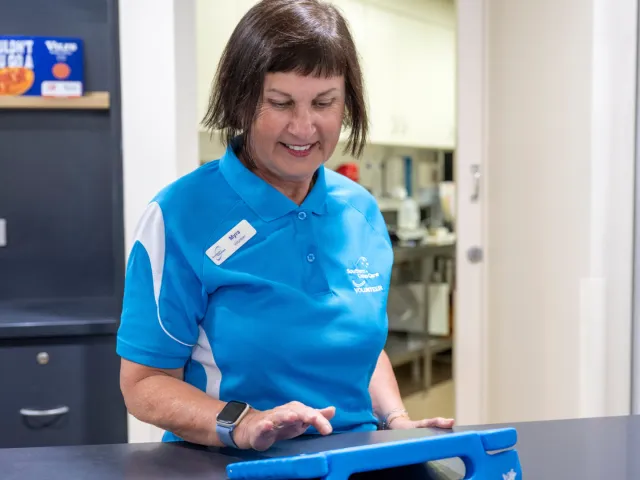
Yes, we will provide you with training to use any equipment in the cafe, including the coffee machine, the simple payment system and anything else you need.
Cafe Connections volunteers do need police checks and food safety training, but we can help you to organise any paperwork you need.
As a health-promoting organisation, Southern Cross Care is following the ATAGI vaccination guidelines for staff, volunteers, clients and residents. While full COVID-19 vaccination and an up-to-date flu vaccination are highly recommended, they are not mandatory for volunteers working within our Residential Care homes.
There is no age limit to volunteer, however you need to be fit enough to do the role you are volunteering for safely. In our Cafe Connections program, for example, you need to be able to stand comfortably for the duration of your shift, carry cups and plates safely, operate equipment safely and walk around the cafe safely.
We also are unable to accept volunteers under the age of 18 in the cafe, however we may have other volunteer roles in our Residential Care homes which are suitable for young people.
Although our cafes in Residential Care can be the hub of the community, they are generally not as busy as a commercial cafe. Residents and visitors like to go to the cafe not just for a coffee or tea, but also for a chat. That is why this program is called Cafe Connections, and a key reason why volunteers can make such a difference to each customer’s day. We are looking for friendly and compassionate people to operate our cafes so that they can make genuine connections with the community that boost residents’ wellbeing.